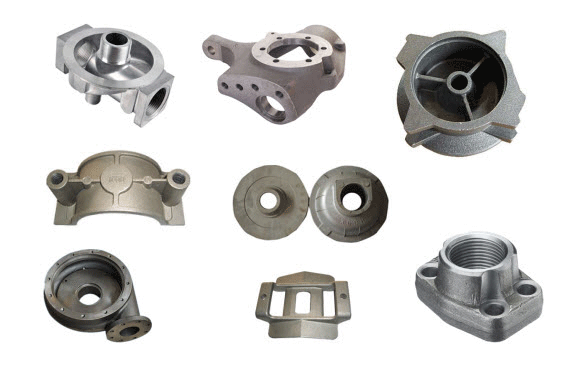
Sand Blasting
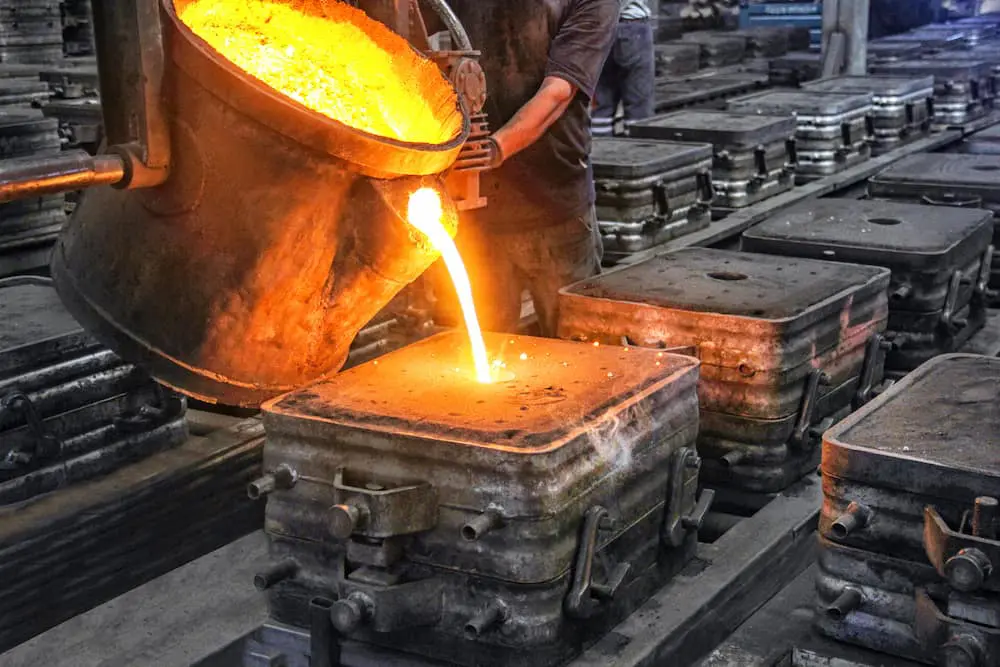
Sand casting is a versatile and widely used manufacturing process in the oil field and related heavy industries, employed to produce durable, often large, metal components with complex shapes. The process involves creating an expendable sand mold into which molten metal is poured, allowed to solidify, and then removed by breaking the mold.
Description of the Process
The general steps for sand casting are:
- Pattern Making: A reusable pattern (a replica of the final part) is made from wood, plastic, or metal. It is designed slightly larger than the final product to account for metal shrinkage during cooling.
- Mold Making: The pattern is placed inside a two-part box called a flask (consisting of the top half, the cope, and the bottom half, the drag). A mixture of sand and a binding agent (like clay and water for "green sand" or chemical resins) is packed around the pattern to form the mold cavity.
- Core Making (if needed): For parts requiring internal passages or hollow sections (e.g., cooling passages in an engine block), a separate sand core is created and inserted into the mold cavity.
- Assembly and Pouring: The cope and drag are assembled, and the molten metal is poured into the mold cavity through a system of channels (sprue, runners, and gates). Risers, reservoirs of excess metal, are used to compensate for shrinkage during solidification.
- Cooling and Removal: After the metal solidifies and cools, the sand mold is broken away in a process called "shakeout" to reveal the rough casting.
- Finishing: The excess material from the gating system (runners, risers, etc.) is cut off. The casting then undergoes cleaning (e.g., shot blasting) and often further machining to achieve the required dimensional accuracy and surface finish for critical areas.
Applications in the Oil Field
In the oil and gas industry, sand casting is used to produce robust components that must withstand demanding environments, including high pressures, abrasive fluids, and extreme temperatures.
Typical applications include:
- Pump and Valve Components: Bodies, housings, and internal parts for various pumps (e.g., ESP pumps, as noted in some field experience, use components that benefit from casting) and valves are produced using sand casting.
- Engine Parts: Components for high-horsepower engines and associated equipment, such as engine blocks, cylinder heads, manifolds, and oil pans, are commonly sand cast.
- Machinery Housings: Large, heavy machine bases, gearboxes, and various equipment housings in industrial and heavy machinery sectors utilize sand castings due to the process's ability to create large, complex shapes economically.
- Fittings and Connectors: Various fittings and connectors used in pipeline and fluid control systems.
Why the Oil Field Uses Sand Casting
- Versatility: It can be used with a wide variety of metals and alloys, including steel, iron, bronze, and aluminum, which is essential for meeting diverse strength and corrosion resistance requirements.
- Size and Complexity: The process can produce parts ranging from a few ounces to several tons, making it suitable for both small components and large industrial equipment.
- Cost-Effectiveness: Compared to other methods like die casting or investment casting, sand casting has lower tooling and equipment costs, making it a viable option for low to medium volume production runs common in specialized industrial applications.
Sand Casting Parts